
Hi thereI am Yasir.
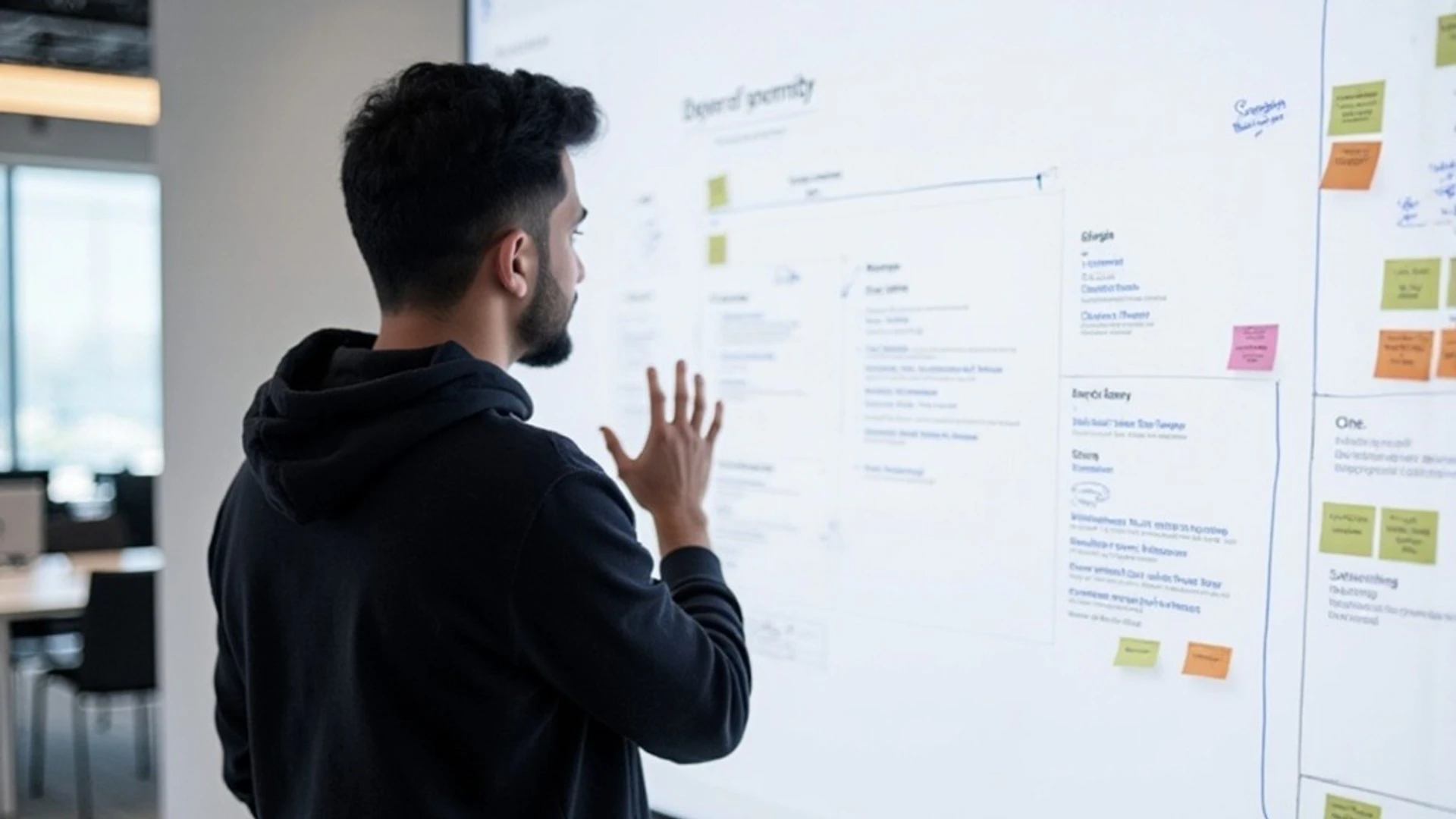
“My mission is to help businesses around the world create digital products that users enjoy, search engines understand, and AI assistants confidently recommend.”
Every website and product I design is engineered with a relentless focus on usability, sub-second code performance, accessibility, search discoverability, and measurable business growth.
Who is Yasir Jamal
I’m a Senior Product Designer with 15+ years of experience designing digital products and experiences across product design, UX, UI, web, technology, and business.
About Yasir Jamal
I’m a Senior Product Designer with 15+ years of experience designing digital products and experiences across product design, UX, UI, web, technology, and business.
My career has always sat at the intersection of design and technology.
I started working professionally in Dubai in 2008, at around 18, designing websites and digital experiences at an advertising agency. At the same time, I was developing a strong technical foundation in HTML, CSS, and JavaScript and learning from an experienced web specialist working at a major media company.
That early combination shaped how I think about design.
I've never seen the interface as the entire product.
I want to understand what is happening behind it, why the experience exists, what the user is trying to accomplish, how the business works, and what the technology needs to support.
That perspective has stayed with me throughout my career as my work evolved from web and interface design into UX and product design.
The Website That Changed How I Think About Products
Around 2010, I built my own portfolio website.
I had designed it. I had built it. I put it online.
And almost nobody visited.
It was one of the most valuable failures of my early career.
A friend introduced me to SEO, and I began studying how people searched and how search engines understood websites. I implemented what I learned and eventually reached the first page of Google for relevant design searches.
The result was tangible: my website began generating two or three enquiries a day without paid advertising.
That experience taught me something that has influenced my thinking ever since:
“Building a product and getting people to use it are different problems.”
A product exists within a larger system of discovery, user intent, business objectives, technology, experience, and outcomes.
That is one of the reasons I naturally think beyond the interface today.
From Interfaces to Systems
As the products I worked on became more complex, my role evolved with them.
I moved deeper into UX, interaction design, information architecture, UI, and product design.
At the same time, my technical background continued to influence my work. I've worked with web technologies and platforms including HTML, CSS, JavaScript, WordPress, and Laravel, and I've spent years working closely with developers to take products from design into implementation.
That experience taught me to think about the system behind every interface:
- •What data drives this experience?
- •What are the business rules?
- •What happens in different states?
- •What are the edge cases?
- •What does engineering need to support?
- •Where are the technical constraints?
- •Where can we simplify the experience without compromising the underlying system?
I don't believe designers need to be engineers.
But I believe great product designers should be technically fluent enough to understand the systems they are designing and have meaningful conversations about trade-offs with engineering.
That is an important part of how I work.
Working on Rocket Internet
A defining chapter of my career was working on Rocket Internet's ecommerce venture in the Middle East, Namshi.
Working in that environment gave me experience inside a fast-moving technology startup, collaborating with designers, developers, managers, and other disciplines to build and evolve a real digital product.
It reinforced something that became central to my approach:
“Product design is a decision-making discipline.”
The work isn't simply about producing polished screens.
It's about understanding a problem deeply, identifying what matters, balancing competing constraints, exploring possible solutions, and helping a multidisciplinary team converge on the right one.
- •Users have needs.
- •Businesses have objectives.
- •Engineering has constraints.
- •Products have existing systems.
- •And teams have limited time and resources.
Good product design sits in the middle of all of those realities.
How I Approach Complex Problems
I don't start with Figma.
I start by understanding the problem.
I want to understand the business context, the users, the existing experience, the competitive landscape, the technology, and the constraints surrounding the product.
- •I study competitors.
- •I research user needs and behaviors.
- •I examine existing workflows.
- •I look at where users come from and what they expect before they enter the product.
- •I work through the information architecture and interaction model before moving into detailed interface design.
- •And throughout the process, I work closely with engineering and product.
The objective isn't to arrive at a beautiful design file.
The objective is to arrive at the right product decision.
Figma is where some of those decisions become visible. It isn't where they begin.
I Design Beyond the Screen
My early experience with SEO gave me an unusual perspective that I still carry into product work.
I learned that even an excellent digital experience can fail if nobody discovers it.
That led me to think about the complete journey:
Discovery → Intent → Experience → Trust → Action → Outcome
Today, the discovery layer is changing again.
People increasingly use AI systems and large language models to discover information, products, companies, and services.
I've been exploring this shift and how digital products need to become understandable not only to users, but also to the systems that help users discover them.
For me, this is not a departure from product design.
It's an extension of the same principle I've followed throughout my career:
“Understand the environment around the product, not just the interface inside it.”
What I Bring to a Product Team
After more than 15 years in digital design, I've developed a breadth of experience that allows me to operate across different parts of the product problem:
- •I can work from strategy into interaction design.
- •From user needs into information architecture.
- •From complex business logic into simple experiences.
- •From prototypes into conversations with engineering.
- •From the interface into the systems behind it.
- •And from the product itself into the ecosystem through which people discover and use it.
I care about craft, but I don't separate craft from strategy.
I care about usability, but I don't separate usability from business outcomes.
I care about technology, but I don't let technical complexity become the user's problem.
And I care about the details without losing sight of the larger product.
Still Evolving
I've worked through several major shifts in digital technology.
I started when websites were largely hand-coded.
I watched the web move into content management systems, responsive design, mobile products, cloud platforms, and increasingly sophisticated digital ecosystems.
Now we're entering another major shift through AI.
What hasn't changed is what interests me most:
Understanding complicated problems and making them simpler for people.
That's what has kept me in design for more than 15 years.
I'm at my best when the problem is complex, the constraints are real, the team is multidisciplinary, and there is an opportunity to make something meaningfully better.
I design digital products by understanding the people who use them, the systems that power them, and the businesses they need to serve.
That is the perspective I bring to every product I work on.
Specialized Digital Product & Web Design Services
Senior-level product strategy, UX engineering, and high-performance web systems delivered with direct founder and executive oversight.
SaaS & Web Application Design
Architecting intuitive product onboarding, self-serve funnels, and complex application interfaces that reduce churn and accelerate user activation.
AI Products & Low-Latency Interfaces
Translating machine learning models and generative AI workflows into clear, human-centered interaction models with real-time feedback loops.
Product Strategy & UX Architecture
User research, information architecture, and rigorous prototyping designed to validate product-market fit and de-risk development before writing code.
Platform & Website Modernization
Refactoring legacy digital platforms to eliminate technical debt, improve Core Web Vitals, and establish visual authority in competitive markets.
Conversion Rate Optimization (CRO)
Diagnosing conversion bottlenecks through quantitative analytics and user journey audits to measurably increase revenue per visitor.
Design Systems & Token Architecture
Building unified, multi-platform Figma design systems and component libraries that maintain brand consistency and speed up engineering velocity.
Custom CMS & Content Governance
Engineering flexible editorial architectures that give marketing teams independent publishing control without risking design or code integrity.
Interactive Visual & Webflow Engineering
Developing responsive, interaction-rich web experiences with clean semantic structure, custom CMS schemas, and seamless production handoff.
Enterprise E-Commerce Solutions
High-performance digital storefronts engineered for regional payment integration, multi-currency checkout, and resilient backend synchronization.
Corporate & Public Sector Platforms
Accessible, secure, and compliant digital portals built to meet institutional governance, data privacy standards, and stakeholder expectations.
High-Impact Acquisition Pages
Strategic landing page architectures engineered to maximize paid media ROAS, capture qualified enterprise leads, and clarify value propositions.
Technical SEO & Search Infrastructure
Deep crawl optimization, semantic schema markup, and performance engineering designed to capture dominant visibility across Google and AI search engines.
Solving Business Problems Through Strategic Process
Every project starts with understanding the business. Rather than jumping straight to visuals, I execute a structured 13-step roadmap—ensuring every decision drives measurable conversion, user clarity, and engineering scalability.
Discovery
Research
Strategy
Architecture
Flows / Wireframes
Prototype / Test
UI Design
Design System
Responsive / Accessible
SEO / Conversion
Development Collaboration
QA
Optimization
Tools I Use to Design & Ship Products
From product discovery and UX research to systems, prototyping, development, analytics, and AI-assisted workflows.
Designing, researching, prototyping, collaborating, and shipping digital products across the product development lifecycle.
Product Design & Technology Ecosystem
Frequently Asked Questions
Clear, direct answers to common questions about hiring Yasir Jamal, project scope, tech stack, and delivery timelines.
Yasir Jamal combines 15+ years of digital product design leadership with commercial growth strategy. Rather than just designing visual layouts, Yasir architects end-to-end SaaS platforms, complex web applications, and intuitive design systems that reduce user churn and maximize revenue.
A Senior Product Designer conducts user research, maps information architecture, crafts high-fidelity interactive Figma prototypes, validates product-market fit, and collaborates directly with engineering teams to build scalable, high-converting digital products.
Yasir holds verified credentials including Google Certified User Experience Specialist, HubSpot Growth-Driven Design Certification (ID: 73ce30bd3145), Coursera / Google A/B Testing & CRO, and Amplitude Product Analytics.
Yasir follows a proven 6-phase framework: 1) Business & User Discovery, 2) Information Architecture & User Journeys, 3) Figma Wireframing & Interactive UI Design, 4) Component Design Systems & Tokens, 5) Usability Testing & Conversion Engineering, and 6) High-Performance Engineering Handoff.
Yasir specializes in digital product design for Artificial Intelligence (AI) platforms, FinTech, Luxury Real Estate (PropTech), Healthcare & MedTech, B2B SaaS, and Enterprise E-Commerce.
Yes. Yasir offers fixed-price product design sprints, fractional Senior Product Designer retainers, and strategic UX advisory for growth-stage startups and enterprise brands in Dubai, Abu Dhabi, and globally.
Yasir provides direct 1-on-1 senior collaboration without junior intermediaries. Work is conducted via real-time Figma canvases, interactive prototypes, Loom walkthroughs, and weekly Zoom/Google Meet design sprints.
Yasir works daily in Figma, FigJam, Linear, Notion, and Framer for UX/UI design. For front-end technical execution, he leverages Astro, Next.js, Tailwind CSS, TypeScript, Webflow, and modern Headless CMS architectures.
Every interface hierarchy, user flow, and interaction pattern is engineered with behavioral psychology and UX analytics to reduce cognitive friction and maximize conversion metrics.
Yasir is based in Dubai Media City, UAE, serving technology hubs including DIFC, Downtown Dubai, Business Bay, Dubai Internet City, Dubai Design District (d3), and Abu Dhabi Global Market (ADGM).
Graphic designers focus on static marketing visuals. A Digital Product Designer designs functional software systems, interactive mobile/web applications, complex workflows, and scalable design token libraries that drive measurable user retention.
Yes. Yasir has designed digital products and enterprise platforms for organizations including Julphar Pharmaceuticals (ADX listed), Westminster Properties, SkyLynx Aviation, World Food Programme, Dubizzle, and high-growth SaaS startups across 14+ markets.